Planning a sailing trip: from charter to casting off
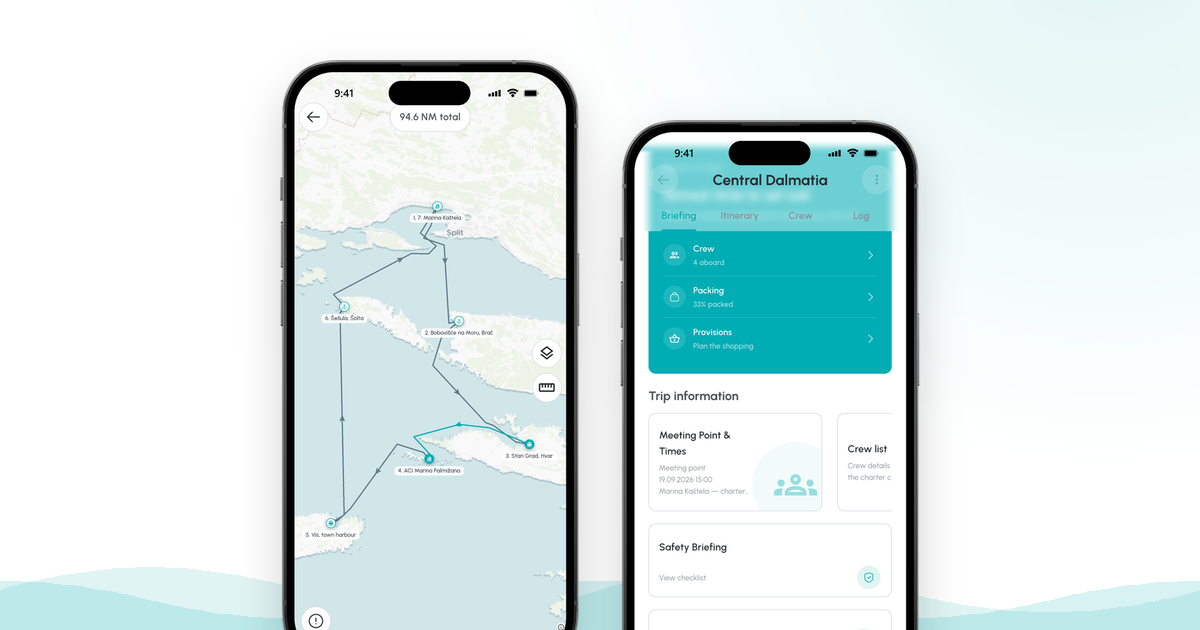
A sailing trip starts long before you cast off. Approach the weeks beforehand with a structure and you will have a clear head on board for wind, weather and crew. This checklist walks through the preparation in eight steps, from the first look at the chart to the weather briefing on the morning of departure.
In short:
- Cruising area and dates first, the boat after.
- Daily legs of 20 to 35 nautical miles and a buffer day.
- Packing list, provisions list and safety briefing done before casting off.
- A ship's kitty with clear rules, a weather briefing every morning.
To take along
Pick the cruising area and the dates
Two questions come first: where to, and when? The two belong together. The Adriatic in June offers different conditions from the Baltic in September, and a trip with children calls for a different area than a week among experienced sailors.
- Be honest about the crew's experience: how many miles a day are relaxed?
- Check the season and the weather windows: the mistral, the bora and autumn gales all have their times.
- Count the travel days: a Saturday-to-Saturday charter rarely leaves more than six sailing days.
Settle the boat and the charter
With the area chosen, the boat comes next. Size, number of cabins and equipment follow from the crew and from what the trip is meant to be: relaxed bay hopping or sporty legs.
When booking, look at the details that cost time later: where exactly is the charter base, from when is check-in possible, which documents does the charter company require, and how does the boat handover work? These facts belong in one place the whole crew can find, not in an email from three months ago.
Put the crew together and invite them
A good crew is not a matter of numbers but of the mix. Who likes to sail, who likes to cook, who takes over the ship's kitty? Once the group is set, everyone needs the same information: meeting point, times, what to bring and what stays on board.
A crew list with names, contact details and roles makes sense. The skipper keeps the overview, and nobody has to ask on the pontoon who is still coming.
Plan the route and the legs
The route is the heart of the planning, and it should stay flexible. A realistic daily leg for a mixed crew is 20 to 35 nautical miles; with swimming stops and harbour manoeuvres that is a full day.
- Set the start and end harbour, usually the charter base.
- Enter a destination and at least one alternative harbour for every day.
- Plan a buffer day so a strong-wind day does not threaten the way back.
- Reserve berths in popular harbours in advance where that is possible.
The best route is the one that can be changed on day two without drama.
Set up the packing list and the provisions list
Two lists, two goals. The packing list tells every crew member what belongs in the sea bag: foul-weather gear, non-slip shoes, head torch, sun protection and the documents for check-in. The complete sailing trip packing list, personal and shared, has its own article. The provisions list plans the big shop on the first day and the top-ups along the way.
Both are easy to share out: one person takes the shopping, another the galley on the first evening. What is done gets ticked off, so nothing is bought twice and nothing is missing.
Prepare the safety briefing
Before the first departure comes the safety briefing. It is the skipper's duty and should be prepared, not improvised. A good checklist covers:
- Life jackets, lifelines and how to clip on
- Fire extinguishers, seacocks and the bilge pump
- Radio, distress call and the boat's position in an emergency
- The man-overboard manoeuvre and who does what
- Gas system, engine and how to behave when refuelling
Document the briefing and have the crew confirm it, and you have a clean record later and a crew that knows where everything is.
Set up the ship's kitty
Diesel, harbour fees, shopping and the evening at the restaurant: a trip brings many small expenses, rarely paid by the same person. A shared ship's kitty with one deposit per head solves that elegantly. Whoever pays something enters it; at the end a settlement shows who still owes whom.
What matters is agreeing the rules beforehand: what does the kitty pay for, what stays private? That way there are no discussions on the last evening.
The weather briefing on departure day
On the morning of departure, a look at the weather is part of the ritual: wind strength and direction for the planned leg, gusts, waves and the outlook for the next day. From that follow the best window to cast off and the decision whether the route holds or the alternative harbour is up.
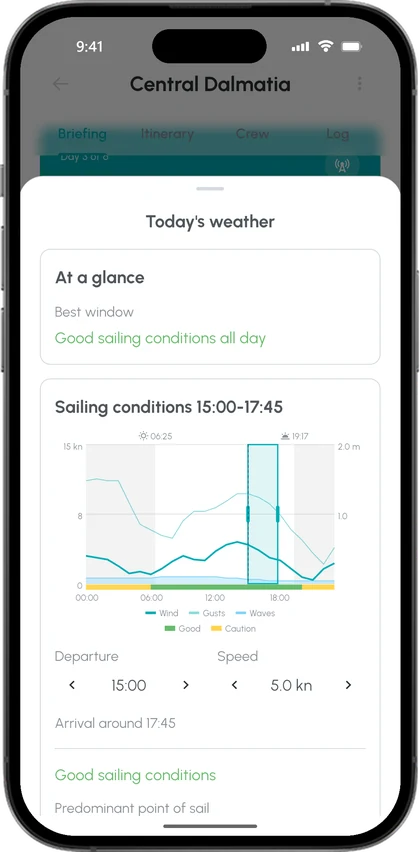
The briefing belongs to the whole crew, not just in the skipper's head. Those who know what is coming pack the right jacket and go into the manoeuvres more relaxed.